
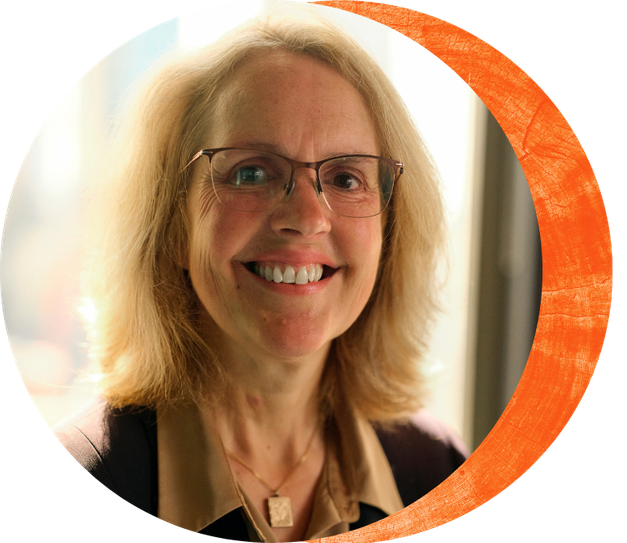
Cranlana moderator Jacqueline Stone reflects on our recent Executive Colloquium in Brisbane, where a diverse group of leaders spent five days pressure-testing philosophy’s foundational ideas: freedom, fairness, responsibility, truth. Is everything philosophy? And if so, what does that mean for how we lead?
The MONA in Tasmania is a unique experience. You arrive by colourful ferry and are first greeted by the façade of a faux supermarket. Is this the start of the art? Is that rubbish bin actually a bin, or a brilliant commentary on the ephemeral nature of life and our attachment to possessions? And you start wondering, is everything here actually art?
We had a similar moment at Cranlana’s Brisbane Colloquium: is everything philosophy?
Once you start unpicking some of our foundational ideas, what we mean by freedom, fairness, responsibility, truth, the good life, philosophy has a habit of turning up everywhere. It becomes the invisible web in which we are all entangled. Shaping our assumptions, our decisions and our understanding of what we owe to one another.
Fortunately, we had a wonderfully diverse and professional group with whom to discover this. While the participants came from very different worlds and perspectives, they shared some essential qualities, curiosity, respect, open-mindedness and a willingness to entertain an idea before deciding whether they agreed with it. These are useful qualities in a Colloquium and, it turns out, in life.
My co-moderator, Cressida Gaukroger, is a bona fide philosopher, which was both reassuring and occasionally rather dangerous. Her ability to bring philosophical rigour to our discussions helped us go beyond simply having interesting opinions and into the more demanding territory of asking why we hold them.
We were also fortunate to have a First Nations perspective in the room. It was illuminating and, at times, genuinely eye-opening, a reminder that the philosophical assumptions we regard as obvious are not necessarily universal and that different ways of understanding our relationships with people, place and responsibility can profoundly shift the conversation.

Some of my favourite discussions explored where the moral weight of a decision actually sits. Is it in our motives? In the outcomes we produce? In the process by which we arrive at a decision? Or does ethical leadership require us to hold all three in view, even when they pull in different directions?
And then there was Plato’s cave. This group took to it with enthusiasm, curiosity and more intellectual generosity than the prisoners in Plato’s original story could probably have managed.
Perhaps that is what makes the Colloquium so rewarding. We don’t necessarily leave with fewer questions. We leave with better questions, and perhaps a little more awareness of the assumptions hiding behind our answers.
Thank you to our engaged, thoughtful and thoroughly enjoyable participants, and to Cressida for her wisdom, generosity and philosophical provocation.
And to everyone who has recently completed a Cranlana Colloquium, thank you for being willing to think seriously, disagree generously and occasionally wonder whether the bin is art.
If Jacqueline’s reflection has you asking your own questions about freedom, fairness or what you owe to others, our flagship program might be for you. Find out more about upcoming programs here: